 EN
EN
 INA
INA
Udayana University Archaeology Student Participates in the 2025/2026 Faculty of Humanities Consortium “Merdeka” Student Exchange Program at UGM
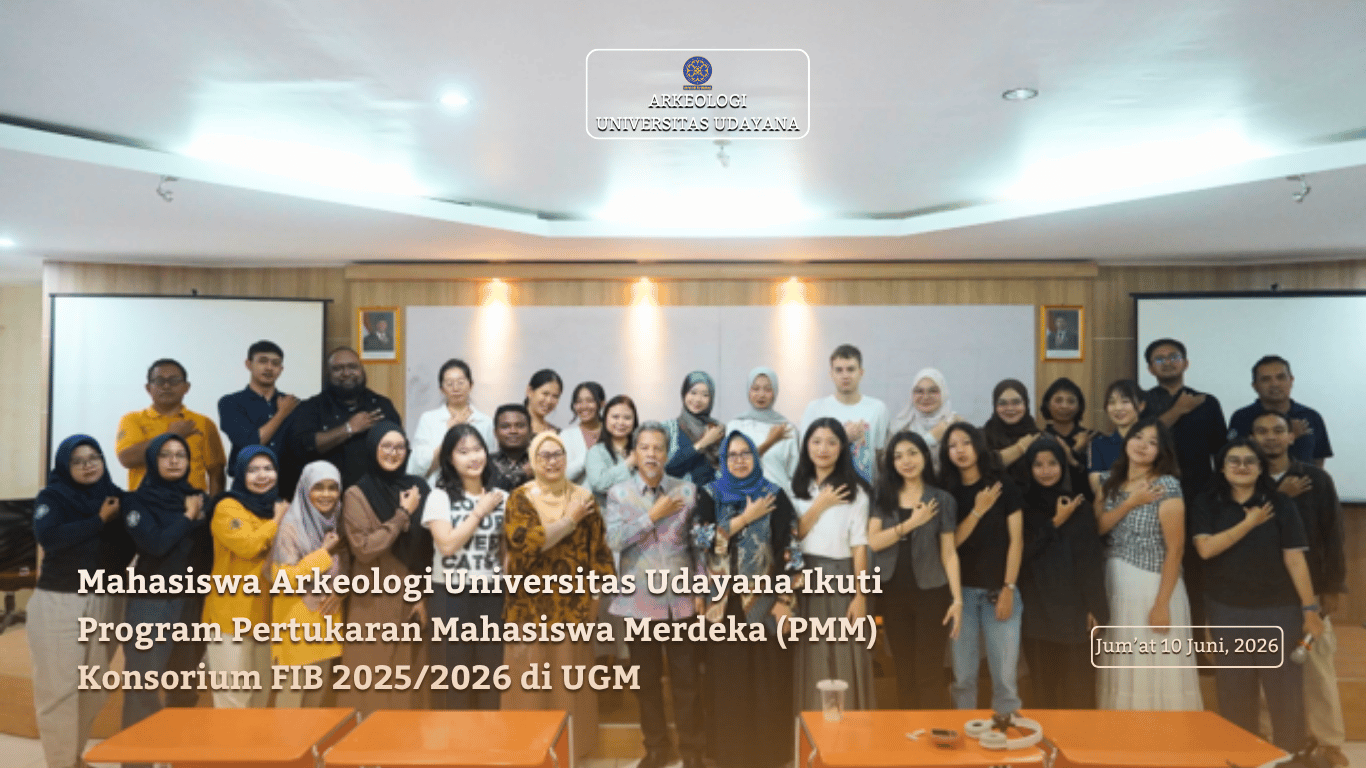
Denpasar – Syifa Sabrina Nabela Anggraeni (2301551038), a student from the Archaeology Study Program at Udayana University, participated in the 2025/2026 Student Exchange Program of the Faculty of Humanities (FIB) Consortium at the Faculty of Humanities, Universitas Gadjah Mada (UGM), Yogyakarta. The four-month program, held from February 12 to June 10, 2026, provides students with the opportunity to broaden their academic experiences while exploring cultural diversity through cross-campus learning.
The Faculty of Humanities Consortium Student Exchange Program (PMM Konsorsium FIB) is an academic mobility program organized by the Consortium of Deans of Faculties of Humanities across Indonesia. Unlike the regular PMM program organized by the Ministry of Education, Culture, Research, and Technology, this program specifically brings together students from the Faculties of Humanities to participate in academic and cultural learning at partner universities across different regions. Through a credit conversion scheme, students have the opportunity to experience learning with different curricula and teaching approaches, while broadening their understanding of Indonesia’s cultural diversity. The program also aims to enhance students’ academic competencies, develop their critical thinking and adaptability skills, and strengthen collaboration among students as well as between the Faculties of Humanities from various universities.
For the 2025/2026 academic year, Udayana University sent three students to participate in the program, consisting of one from the Archaeology program and two from the English Literature program. In total, this program was attended by 21 students, comprising 9 students from various universities in Indonesia—such as Brawijaya University, Sebelas Maret University, Andalas University, and Diponegoro University, as well as 12 international students from Kokushikan University, Hankuk University of Foreign Studies, National Chengchi University, the University of Naples L’Orientale, Universiyi Brunei Darussalam, Palacký University Olomouc, and Kobe University.
Syifa chose UGM as the host university because it offers an academic environment conducive to writing a thesis and is one of the top universities in the country. In addition, Syifa received a recommendation from a researcher to utilize the UGM Library’s collections, particularly its Dutch archival materials and various references related to her research topics. The wide range of academic facilities available at UGM also became one of the key considerations in selecting the university.
One of the advantages of the FIB Consortium’s PMM program at UGM was the opportunity for students to take courses across different majors based on their individual academic interests. Syifa took advantage of this opportunity by enrolling in 20 credits, consisting of Selected Topics in Archaeology (4 credits), Archaeological Narratives (3 credits), Maritime Archaeology (3 credits), Economic History (4 credits), 19th- and 20th-Century Indonesian History (4credits) from the History Program, and English for Academic Writing and Presentation (2credits) as a general education course. The opportunity to take these interdisciplinary courses not only provided learning experiences beyond the field of archaeology but also supported the development of her final thesis by offering a broader perspective.
In addition to attending classes, PMM participants received the same benefits as regular UGM students, such as access to Simaster, e-KTM, library services, the Co-Working Space (CWS), transportation to the UGM PIT campus via Transgama, drinking water refill stations, and the free Sibuya breakfast program. Throughout the program, lecturers provided an open discussion environment, allowing students to receive intensive guidance and consultation regarding their final projects. Furthermore, Participants were also allowed to present their thesis drafts before Archaeology lecturers at UGM and receive constructive feedback.
Beyond academic activities, her experience during the PMM program was also enriched by various activities that broadened his cultural horizons and expanded his network. Together with other archaeology students from Udayana University, he took part in a visit to the Sonobudoyo Museum. She also had the opportunity to meet with Archaeology students from various universities who were participating in the MBKM Research program at BRIN Bumiayu and to witness a traditional ceremony at the Yogyakarta Palace in commemoration of Hamengkubuwono X’s 80th birthday on April 2, 2026. In addition, there were several activities initiated by fellow PMM participants.
For her, the most memorable aspect of the program was the opportunity to engage in intensive discussions with highly experienced lecturers, who even lent their personal reference books to support her undergraduate research. She was also introduced to key figures in her research area, experienced an interactive round-table discussion learning method that encouraged every student to contribute based on assigned readings, and established meaningful connections with students from various regions of Indonesia, as well as from different countries. These experiences not only enriched her academic knowledge but also broadened her perspective on cultural diversity and higher education.
Syifa also hopes that more students from the Archaeology Study Program at Udayana University will participate in the Faculty of Humanities Consortium Student Exchange Program in the coming years.
“I hope that the experience I’ve gained will inspire my fellow Archaeology students at Udayana University to participate in the PMM Faculty of Humanities Consortium Program, and enjoy equally, or even more, rewarding experiences. I also hope that the knowledge, insights, and experiences I have gained can be shared with the wider community, especially with fellow Archaeology students at Udayana University, so that they continue to benefit both the present and future generations," said Syifa.
FACULTY OF HUMANITIES