 EN
EN
 INA
INA
To Strengthen Cultural Diplomacy Between Bali and China, an Archaeology Lecturer from Udayana University Participates in the Kang Cing Wie Program in Beijing
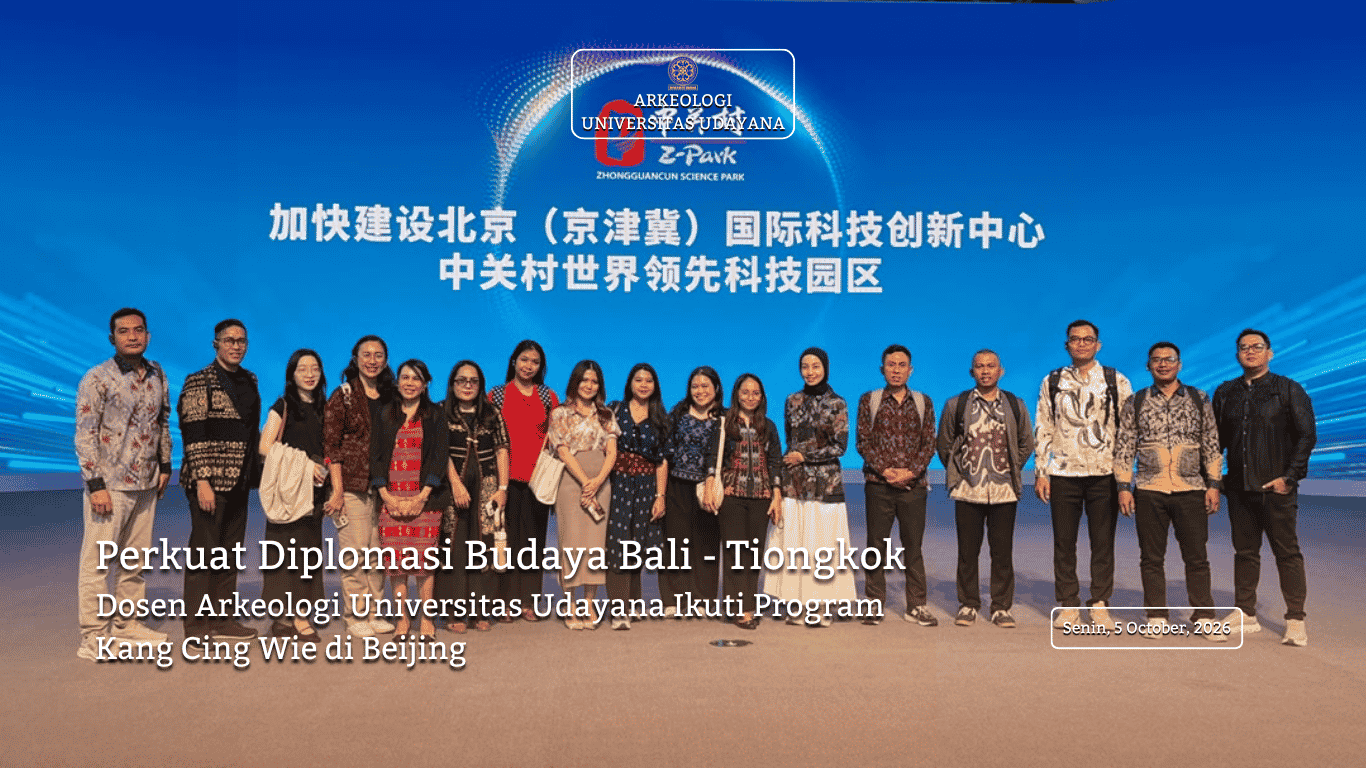
Denpasar — I Made Agus Julianto, S.S., M.Sc., a lecturer in the Archaeology Program at the Faculty of Humanities, Udayana University, was one of Udayana University’s representatives in the “Kang Cing Wie Cultural Exchange Program,” which took place in Beijing, China, on September 20–24, 2026. This program was initiated by the Consulate General of the People’s Republic of China in Denpasar as an effort to promote the exchange of personnel, culture, and knowledge between Indonesia and China. One of the main agenda items of this program was a discussion bringing together delegations of Indonesian and Chinese researchers, which took place at Beijing Foreign Studies University (BFSU). During the forum, the delegates gave presentations and engaged in discussions regarding various opportunities for cooperation between Indonesia and China, ranging from Technology, culture, tourism, history, archaeology, and agriculture.
On that occasion, Mr. I Made Agus Julianto presented a study titled “Agricultural Technology & Landscape Management: A Comparative Study of Traditional Irrigation Systems and Agrarian Landscapes in South China and Bali (Indonesia).” The presentation discussed the origins of agriculture and the agrarian landscape in mainland China, which later spread during prehistoric times—brought by Austronesian-speaking peoples to the Indonesian archipelago, including Bali—and examined its development up to the present day.
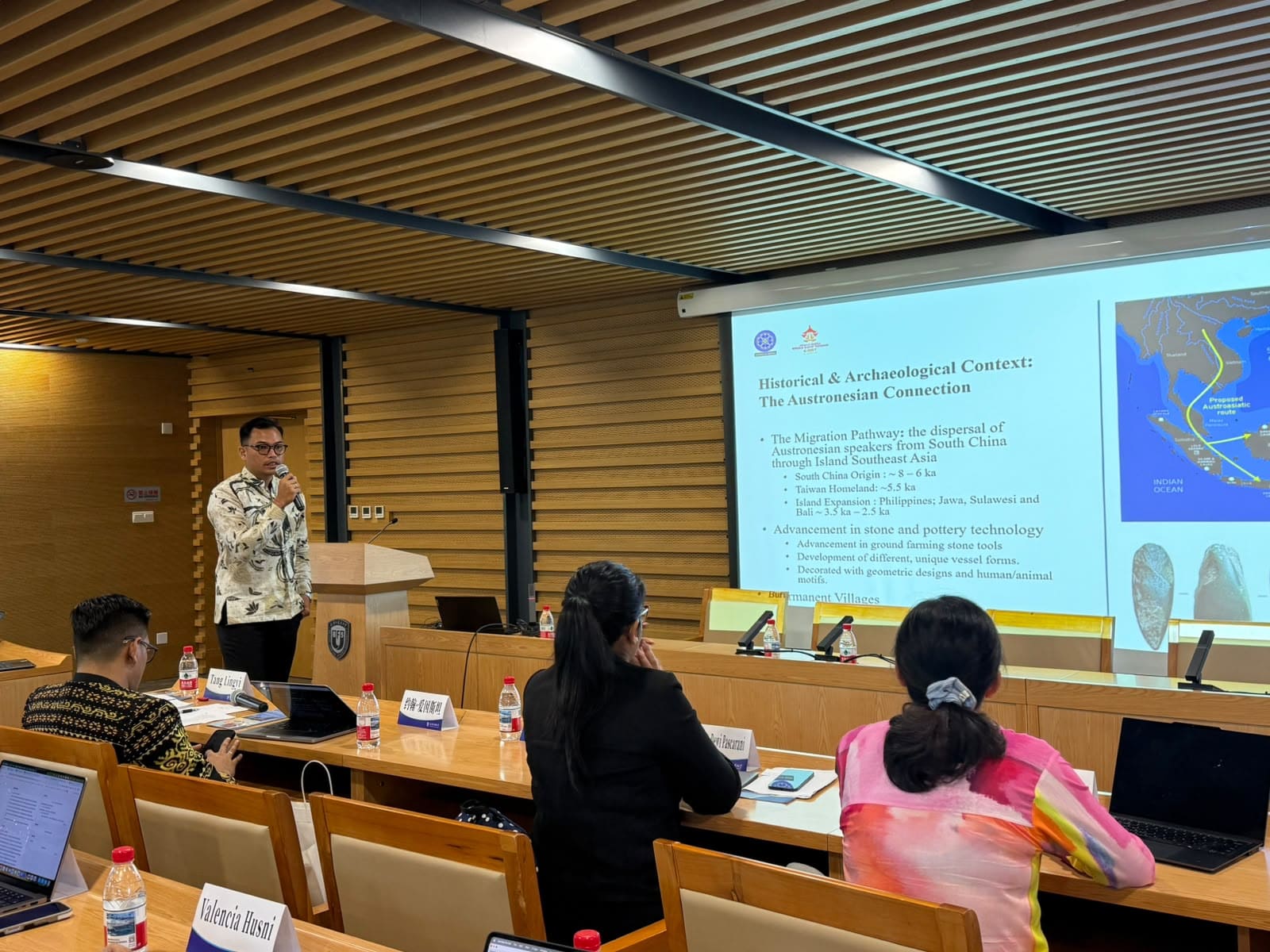
The discussion served as a forum for exchanging knowledge while fostering academic networking with delegates from various fields.
“This event opened up academic networking opportunities, where each delegate shared ideas from their respective fields. As a result, the potential for future collaboration is quite significant,” stated Mr. Agus.
In addition to participating in the academic forum, the delegates also visited several technology facilities, as well as cultural and historical sites in Beijing. Among them were the Central Gifts and Artifacts Center, iFLYTEK, the CGTN Indonesian Language Programming Department, the Great Wall of China, the Forbidden City, and the Anding Waste-to-Energy Plant. This series of visits provided insight into developments in technology, agriculture, environmental management, media, and cultural preservation in China.
From an archaeological and museum perspective, Mr. Agus sees the use of technology as part of an effort to provide new experiences for visitors. Audiovisual technology and various digital devices are used to help convey information and make the collections and history on display more accessible to visitors. This experience also demonstrates how technology is developed and applied across various sectors, not only in information technology, but also in education, transportation, and even agriculture.
Participation in the Kang Cing Wie Cultural Exchange Program provided an opportunity for Udayana University to expand its academic network and introduce Balinese studies in an international forum. Meetings with academics and researchers from various fields also opened up opportunities for collaboration in education, research, and knowledge exchange, which are expected to continue to grow in the future.
FACULTY OF HUMANITIES