 EN
EN
 INA
INA
The Faculty of Humanities at Udayana University Explores Collaboration with the Bali Provincial Cultural Preservation Center
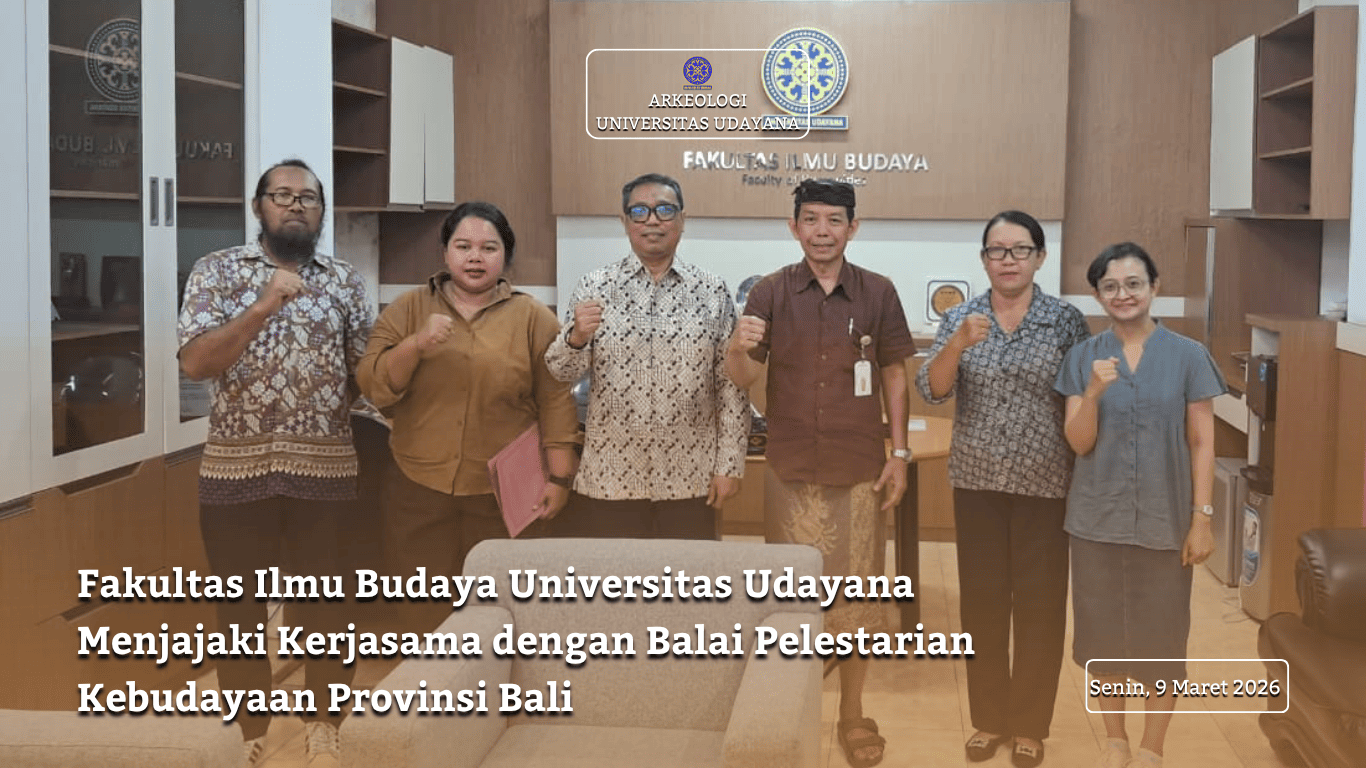
Denpasar, March 9, 2026 — The Dean of the Faculty of Humanities (FIB) at Udayana University, Prof. I Nyoman Aryawibawa, M.A., Ph.D., received a visit from the Head of the Cultural Preservation Office (BPK) of Bali Province, Ministry of Culture, Mr. Iskandar Eko Priyotomo, and several BPK staff members at the FIB Campus on Nias Street, Denpasar.
The meeting, which lasted about two hours, discussed the exploration of cultural development cooperation between the Cultural Preservation Center and the Faculty of Humanities at Udayana University. The focus of the cooperation is to facilitate student activities in internship programs, research, cultural hubs, and various activities, including seminars and international events.
During the meeting, Prof. Aryawibawa was accompanied by the Vice Dean for Student Affairs and Information, Dr. Ni Ketut Puji Astiti Laksmi, S.S., M.Si., as well as lecturers from the Archaeology Study Program. Prof. Aryawibawa stated that his office welcomed this proposed collaboration. He also expressed appreciation for the trust placed by the Cultural Preservation Center in FIB regarding the development and utilization of both Cultural Advancement Objects (OPK) and Cultural Heritage Sites.
“We wholeheartedly welcome this collaboration. Beyond its cultural significance, it also enhances the visibility of FIB and Udayana University in broader forums,” said Prof. Aryawibawa.
On that occasion, he also outlined many cultural collaborations with various government agencies, such as the Bali Provincial Department of Culture, and other universities, such as the Indonesian Institute of the Arts (ISI) Denpasar, which the Faculty of Letters has undertaken, particularly in research, studies, and the publication of findings that serve as a foundation for sustainable development in Bali.
Meanwhile, Mr. Iskandar expressed his enthusiasm regarding the positive reception of this collaboration plan. He emphasized the importance of involving academics, both faculty members and students, in various cultural promotion programs. He stressed the need for publications in popular science formats so that the BPK’s performance is visible to the public at both national and international levels.
According to him, student involvement in various BPK programs allows them to gain hands-on experience in the field: “Cultural hubs can serve as learning platforms while also contributing to the BPK’s performance metrics. This will be a strategic step in sustaining the cooperation that has been established so far. Not only in the material realm but also in the non-material realm, such as language and other creative works,” he said.
Culture is a core value in Bali, so it is only fitting that it receives primary attention. Cultural studies also offer an opportunity to bring research findings and studies that have been accumulating without significant benefit closer to the public as the owners and recipients of cultural assets.
It is hoped that this collaboration can be immediately followed up in the form of a cultural hub program and the dissemination of study results to a cultural group, serving as a concrete step to contribute to cultural preservation while strengthening the network among cultural institutions.
FACULTY OF HUMANITIES