 EN
EN
 INA
INA
Archaeology Study Program Conducts Excavation Training at the Gilimanuk Prehistoric Human Museum
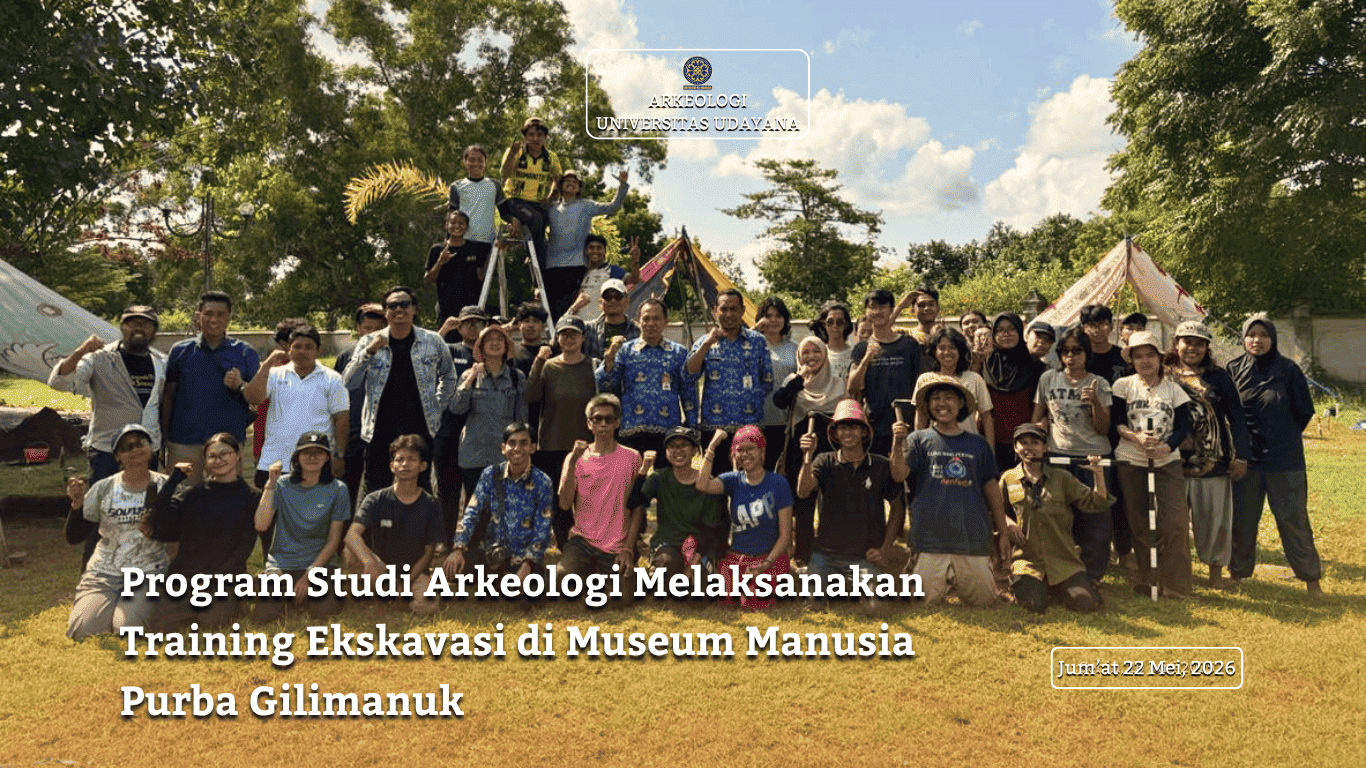
Denpasar, May 22, 2026 - Archaeology students from the Faculty of Humanities, Udayana University, class of 2024, carried out an excavation training activity at the Gilimanuk Prehistoric Human Museum. This activity is part of the archaeology practicum course, which is routinely held every year to provide students with direct experience in the process of excavation, recording, documentation, and scientific analysis of archaeological data in the field. This activity was carried out through a collaboration between the Archaeology Program at Udayana University and the Tourism and Culture Office of Jembrana Regency.
The activity involved fourth-semester archaeology students from the class of 2024 under the supervision of theArchaeological Practicum lecturers, Mr. Kristiawan, S.S., M.A., and Mr. I Made Agus Julianto, S.S., M.Sc., to ensure the excavation was conducted in accordance with scientific principles and the ethics of cultural site preservation.
The excavation training was held over five days, from Monday, May 18 to May 22, 2026. Before the excavation began, the students received basic training on excavation methods, ranging from site surveys and determining the main grid to basic techniques for opening excavation squares. This training aimed to enhance the students’ understanding of the fieldwork stages involved in archaeological research.
On the first day, the students visited a museum, surveyed the area, attended the opening ceremony with the Jembrana Regency Tourism and Culture Office, and held a discussion with their supervising lecturers to determine the main grid points that would serve as the reference for dividing the excavation squares among the groups. Subsequently, on May 19, 2026, the students began marking the excavation grid points and carried out the excavation process by measuring the x and y axes based on the previously determined main grid. In the following days, excavation activities were conducted from morning to afternoon, 8:00 AM to 5:00 PM WITA, while in the evenings, students performed initial analysis of the findings obtained during the excavation process, directly supervised by the field instructors. On the final day, the students also created stratigraphic drawings as part of the site’s stratigraphic data documentation. During the excavation, there was some rain, but it did not significantly impact the progress of the excavation or the condition of the opened excavation units.
During this excavation, a number of significant artifacts were discovered, including fragments of plain and decorated pottery, mollusks, fragments of jars, beads (made of stone, glass, shell, and bone), and bone fragments (from both animals and humans). The discovery of beads is particularly noteworthy as they are considered a characteristic find frequently encountered at the Gilimanuk Site. These findings are expected to provide additional insight into the daily activities of past communities in the Gilimanuk area. All findings will be cataloged and analyzed further by the students and their supervising lecturer before being returned to the museum as part of the research data and the preservation of the site’s archaeological collection.
This excavation training program has also garnered attention and support from various parties, ranging from students across different graduating classes, faculty members within the Archaeology Program at Udayana University, museum representatives, and officials from the Jembrana Regency Tourism and Culture Office. The event was also attended in person by the Coordinator of the Archaeology Program, who expressed support and appreciation for the excavation training as an important component of students’ field-based learning.
Through this activity, students are expected to be able to understand and apply methods in archaeological research, particularly excavation methods, furthermore, this activity is expected to enhance their ability to analyze data and findings, as well as deepen their understanding of the potential of archaeological remains in Bali, particularly in the Gilimanuk area, which is known as one of the most important prehistoric sites on the island of Bali. This activity is also expected to contribute to developing archaeological data and preserving the cultural heritage of the Gilimanuk Prehistoric Human Museum.
The lecturers for the Archaeological Practicum course, Mr. Kristiawan, S.S., M.A., as well as Mr. I Made Agus Julianto, S.S., M.Sc., representing the Coordinator of the Archaeology Study Program, also expressed their appreciation and gratitude to the Jembrana Regency Tourism and Culture Office and the Gilimanuk Prehistoric Human Museum for providing support, facilities, and a field learning environment for the students during the excavation activities. “We would like to express our thanks and appreciation to the Jembrana Regency Tourism and Culture Office and the Gilimanuk Prehistoric Man Museum for providing the venue and facilities for students to carry out this excavation activity. We hope that this activity and collaboration can continue and be developed by Udayana University Archaeology students in the coming years,” they stated.
Meanwhile, Qibran, the head of the excavation project and a representative of the class of 2024, also shared his impressions and hopes regarding the five-day event. According to him, the excavation provided a valuable experience because students could get hands-on experience in the field and gain a real-world understanding of the archaeological research process. “This activity taught us that archaeology is not just about theory, but also about precision, patience, and responsibility in interpreting every find made in the field. This experience also broadened our perspective on the rich history of ancient humans in the Gilimanuk region,” he said.
He also emphasized the importance of maintaining the integrity of archaeological data and valuing every discovery made during the excavation process. “Every fragment of the past that is discovered is an important part of understanding the nation’s history and identity. Therefore, every discovery must be preserved and studied with a sense of responsibility. Never grow weary of digging deeper—both literally and in terms of scientific insight,” he concluded.
He also noted that the collaborative atmosphere among students, supervising faculty, museum staff, and relevant agencies ensured the excavation activities proceeded smoothly and with great enthusiasm throughout their implementation. “Moving forward, I hope the Gilimanuk Prehistoric Man Museum continues to grow, both in terms of artifact conservation and educational facilities for the general public, so that this site can become an even more iconic destination for research and historical tourism,” he added.
Through this activity, the students expressed their gratitude to the Jembrana Regency Tourism and Culture Office, the Gilimanuk Prehistoric Man Museum, the Archaeology Study Program, and the supervising lecturers who provided guidance and valuable opportunities throughout the activity. This activity provided hands-on learning experiences in the field that not only broadened the students’ horizons but also served as essential preparation for future research and archaeological activities.
FACULTY OF HUMANITIES